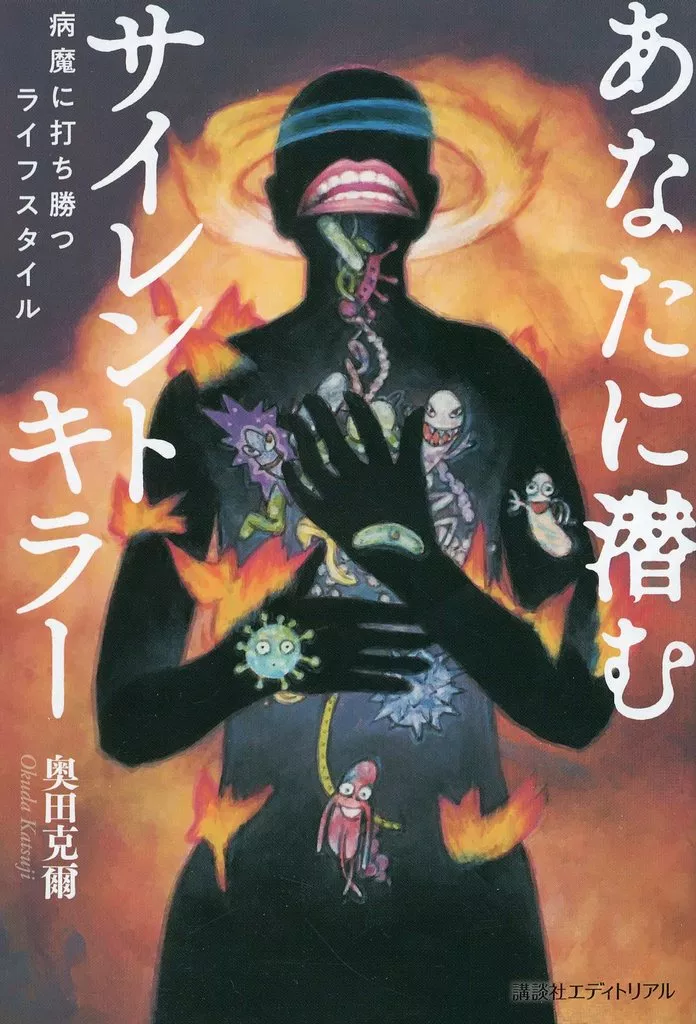
Book (Practical) Medicine Silent Killer Lurking in You / Katsuji Okuda


Product description ※Please note that product information is not in full comprehensive meaning because of the machine translation.
Medicine
[Introduction to Contents]
This book takes up a silent killer that usually hides without causing disease, but suddenly attacks when the immune system is weakened, and takes away even our lives. It is not a book that threatens us by any means, but it is a book to help deepen our knowledge of silent killer that is a great enemy of unguarded attention that has the risk of persistent infection in order to maintain our health.
Our human body is made up of approximately 60 trillion cells. The number of bacteria that live in our body is over 100 trillion, and it weighs 1.4 kg, which is about the weight of the brain. The bacteria that live in our body are bacterial flora, but viruses and parasites as well as bacteria are collectively called the microbiome.
The good bacteria in the intestinal flora are closely linked with the small intestine, which is the largest immune organ, and give us the benefit of intestinal cephalic phase that activates the brain by secreting hormones.
Research on the intestinal bacterial flora has even produced new treatments for various diseases.
On the other hand, it has become clear that intestinal bacterial flora, a condition in which bad bacteria increase in the intestine, is the main cause of health failure leading to emotional instability, obesity, diabetes, high blood pressure, arteriosclerosis, allergies, and cognitive disorders.
On the other hand, oral bacterial flora prevents E. coli and Helicobacter pylori There is no. In addition, it has been established that periodontal pathogens enter the brain from the bloodstream and are even involved in the development of Alzheimer's disease.
It is also established that periodontal pathogens enter the brain from the blood stream and are involved in the development of Alzheimer's disease.
He is an honorary member of seven academic societies, including the Japanese Society of Bacteriology and the Society of Periodontal Diseases. He graduated from Tokyo Dental University in 1968, studied at Karolinska University after passing the Swedish Government International Student Examination in 1978, studied at National Institutes of Health (NIH) in 1978, studied at the New York State University Center for Periodontal Diseases from 1979. In 1989, he was a professor of microbiology at Tokyo Dental University, and served as a lecturer at Hokkaido University, Osaka University, Hiroshima University, Showa University, Tokushima University, Kyushu University. In 2008, he was a professor of pharmacy at Heisei Teikyo University. In 1993, he served as a dental representative for 12 years at the Ministry of Health and Welfare's Longevity Science Research. He served as president of the Japanese Branch of the International Society of Dentistry and as a director of the Japanese Society of Bacteriology. He received the Japanese Waksman Foundation Award and the President of the Dental 8020 Ishiyaku decayed tooth