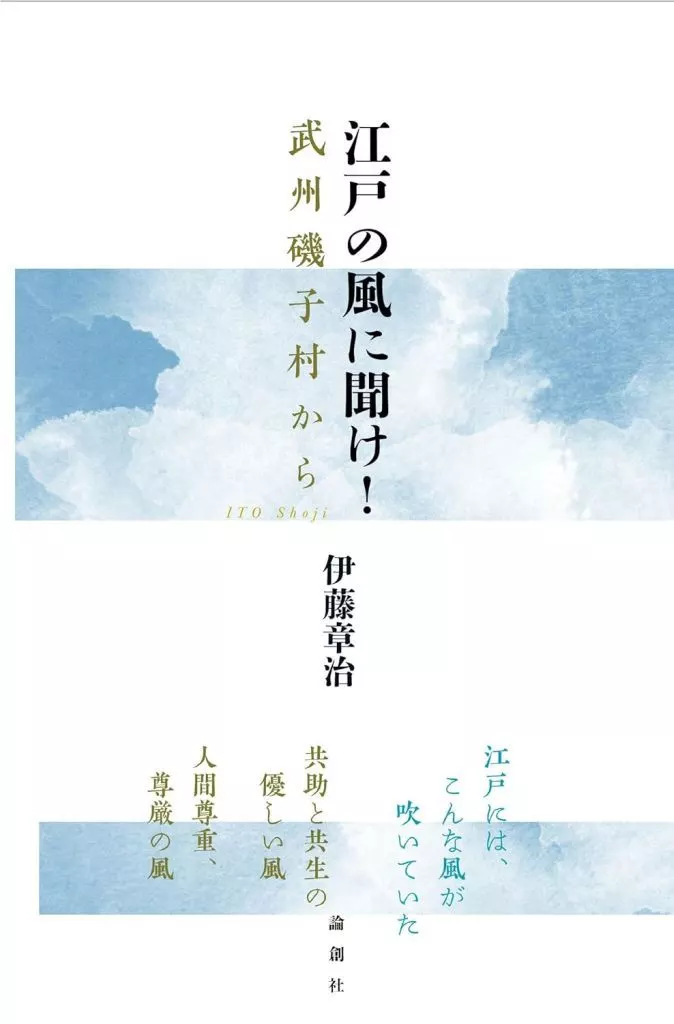
History of Japan Listen to the Wind of Edo! / Shoji Ito


Product description ※Please note that product information is not in full comprehensive meaning because of the machine translation.
Japanese History : One million Capital The city of Edo was home to a Japanese Icefish near the mouth of the Sumida River, and a crane was flying elegantly in the sky.
Why the world became an "environmental superpower"?
The way people live and die.
The Edo period produces people who live and die beautifully.
There is no doubt that the Edo civilization has a message for us who live in the second century of confusion.
There is no doubt that the Edo civilization has a message for us who live in the second century of confusion.
In 1940 (1940), he was born in former Manchuria (now northeast China).
In 1964, he graduated from the Faculty of Law at Nagoya University.
In the same year, he joined Chunichi Shimbun (Tokyo Shimbun), served as a reporter for the Yokkaichi branch office and the Department of Social Affairs, the Bangkok Branch Office, and the Department of Cultural Affairs at Tokyo Headquarters. In 1998, he served as an editor and an editorial writer.
From 2001 to 2010, he was a professor at Obirin University.
At present, he is an emeritus professor at Tokyo University.
His main books are 『 Origin, Record of 10 years of Yokkaichi Pollution 』 (pen name Eiji Ono, Keiso-Shobo, 1971), 『 Earthquake-Defenseless City 』 (co-authored by Keiso-Shobo, 1979), 『 Taiso-Binbei 』 (Keiso-Shobo, 1984), Environmental Problems from 『 Site 』 (co-authored by Obirin Gakuen Shuppan, 1995), Dreams of 『 -- Journey of Asian People 』 (Gentosha, 1996), World History of 『 Potato 』 (Chuko Shinsho, 2008), 『 Lebanon Cedar Story 』 (co-authored by Obirin Gakuen Shuppan, 2010), and Tales of Wind and Windmill 』 (Ronsosha, 2012).
『