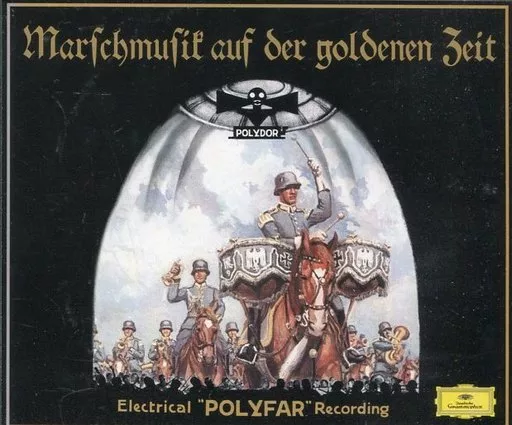
Classic CD Reviving German Polydor Army Band-March of Golden Age


Product description ※Please note that product information is not in full comprehensive meaning because of the machine translation.
[1] (1) (1) Kimiyoyo (Hiromori Hayashi) (2) Dokitsu Kokuta (J. Haydn) (3) March for warships (Fujikichi Setoguchi) (4) March for Shikishima Music (Tokichi Setoguchi) (5) Observatory march (Le Roux) (6) Ship watching march (Kozo Yoshimoto) (7) Marching pursuit march (Kozo Yoshimoto) (8) Tokyo march (Tokichi Setoguchi) ( 9) March of `` The Role of the Gengo '' (edited by Kenko Nagai / Tokichi Setoguchi) (10) March on Taihu Ship (Eckert) (11) Marching on behalf of you (Kozo Yoshimoto) (12) Triumphal March (Rikiji Ogino) (13) March `` The Spirit of Militants '' (Hozumi Tanaka / Tokichi Setoguchi) (14) March `` March of Snow '' (Tenko Nagai / Ed.Tokichi Setoguchi) (15) Great Dairyu Memorial March (Sadamaro Iwai) (16) Radio March (Tokichi Setoguchi) (17) Echigo Lion (1) (Tokichi Setoguchi) (18) Echigo Lion (2) (Tokichi Setoguchi) (19) Army fast walking trumpet (20) Navy fast walking Trumpet (21) March on the Yellow Sea Battle (Hozumi Tanaka / Tokichi Setoguchi) (22) March on the Sea of Japan Commemorative March (Tokichi Setoguchi) (23) March for Farewell (Tokichi Setoguchi) (24) Shikishima March (Fujiyoshi Setoguchi) (25) March on warships (Fujikichi Setoguchi) [2] (1) March on Padonville (Furst) (2) March on Nibelungen (Wagner / Zondark) (3) March `` Hidexburg (Helzer) (4) March `` Our Guards '' (Förster) (5) March `` Yuruganu Loyalty '' (Taike) (6) March `` Glory of Prussia '' (Pifke) (7) March `` Duke of Braunschweig '' (8) Marcher Brooker-Lager (Kral) (9) March Bombardon (Zaro) (10) March `` Village Europe '' (Bron) (11) March `` Farewell Swordsman '' (Franken (Burg) (12) March `` Old Mantle '' (Fleibe) (13) March `` Blue Eyes '' (Moise) (14) Split March No. 1 (Mehrendorf) (15) Honor Guard March (Reinhardt) (16) March `` German Honor '' (Schroeder) (17) King Karl March (Unrat) (18) March `` Dedicated Gun '' (Islebaut) (19) Song `` Fortress of Duppel '' (Pifke) (20) March of Andreas Hofer (Knevesberger / Blankenburg) (21) March of Tyrol (Mülberger) (22) March `` Duke of Albrecht '' (Komzerk) (23) Radetzky March (J. Strauss I) (24) March `` Old Friend '' (Taike) [3] (1) Brandenburg Vampire March (Henrion) (2) Fareberin Cavalry March ( (3) March under the emblem of Yamagata (4) Fanfanale of a Crusader knight (5) (5) Segregation by parallel pedestrian march (Dene) (6) Segregation by fast pacing March (Böhme) (7) Marching in stepped steps (Hertel) (8) March in Pachenheim (9) March in Sweden (10) March in Sweden (Faust) (11) March in Alexander (Leonhard) ) (12) Rapid march (J. Strauss I) (13) Army march No. 13 (Wilhelm) (14) Fortress guard exchange (1) (15) Change of Citadel Guard (2) (16) March of Helene (Luppelt) (17) March of Coburg (18) March of Snipers Separation March (Lippe) (19) Cheerful March (Hauschild) ( 20) March `` Fly Veck '' (Latin) (21) March `` Hoch und Deutschmeister '' (Airtor) (22) March `` Children of the Regiment '' (Fuchek) (23) March (Link) (24) March of Steinmetz (Bratfish)
[Genre]
Orchestral music
[List of performers]
[1] (1) ~ (11) Georg Schaaf conducts the German Polydroid Army (12) Adolf Berdin conducts the 9th Infantry Infantry (13) (14) Franz von Bron conducts the German Polydroid Army (15)-(18) Josef Sunaga conducts the German Polydroid Army (19) (20) Joseph Sunaga commanded German Infantry 9th Regiment Army Band (21) 〜 (24) Joseph Sunaga commanded German Polydor Army Band (25) A Lois Merihar conducts German Polydor Army Band [2] Josef Sunaga conducts Gramophone Brass Band [3] (1)-(15) Josef Sunaga conducts Gramophone Brass Band (16)-(24) Adolf Beldeen conducts German Infantry No. 9 Regiment Army Band
[1] 27-28 [2] 27-29 [3] 27-29
[Label]
> Gramophone
[Number]
A total of 73 Japanese and German march songs are recorded. And most are army marches. The recording year is the beginning of Showa. It is a product of the times when the demand for marches was extremely high. The work which cannot be heard now sounds really fresh. It is a performance that can be called the starting point to know what a march is. Content that is no longer possible.
[New CD comment]
The relationship between Japan and German Gramophone started from "Kimigayo" and "Gunship March" released in 1927. This reprint celebrating the 100th anniversary of the founding is a very valuable sound source at that time!
Track list
- 1. 君が代(第1集 日本の行進曲集)
- 2. 獨逸國歌(第1集 日本の行進曲集)
- 3. 軍艦行進曲(第1集 日本の行進曲集)
- 4. 敷島艦行進曲(第1集 日本の行進曲集)
- 5. 観兵式分列行進曲(第1集 日本の行進曲集)
- 6. 観艦式行進曲(第1集 日本の行進曲集)
- 7. 進撃追撃行進曲(第1集 日本の行進曲集)
- 8. 東京行進曲(第1集 日本の行進曲集)
- 9. 「元寇の役」行進曲(第1集 日本の行進曲集)
- 10. 太湖船行進曲(第1集 日本の行進曲集)
- 11. 君が代行進曲(第1集 日本の行進曲集)
- 12. 凱旋行進曲(第1集 日本の行進曲集)
- 13. 行進曲「軍人の精神」(第1集 日本の行進曲集)
- 14. 行進曲「雪の進軍」(第1集 日本の行進曲集)
- 15. 御大禮礼記念行進曲(第1集 日本の行進曲集)
- 16. ラジオ行進曲(第1集 日本の行進曲集)
- 17. 越後獅子(1)(第1集 日本の行進曲集)
- 18. 越後獅子(2)(第1集 日本の行進曲集)
- 19. 陸軍速歩行進ラッパ(陸軍省制定/第1集 日本の行進曲集)
- 20. 海軍速歩行進ラッパ(海軍省制定/第1集 日本の行進曲集)
- 21. 黄海海戦行進曲(第1集 日本の行進曲集)
- 22. 日本海海戦記念行進曲(第1集 日本の行進曲集)
- 23. 告別行進曲(第1集 日本の行進曲集)
- 24. 敷島艦行進曲(第1集 日本の行進曲集)
- 25. 軍艦行進曲(第1集 日本の行進曲集)
- 1. パドンヴィレ行進曲(第2集 ヨーゼフ・スナガ名演集)
- 10. 行進曲「ヨーロッパ万歳」(第2集 ヨーゼフ・スナガ名演集)
- 11. 行進曲「剣士の告別」(第2集 ヨーゼフ・スナガ名演集)
- 12. 行進曲「古い外套」(伝承曲/第2集 ヨーゼフ・スナガ名演集)
- 13. 行進曲「青い瞳」
- 14. 分列行進曲第1番(第2集 ヨーゼフ・スナガ名演集)
- 15. 儀仗兵行進曲(第2集 ヨーゼフ・スナガ名演集)
- 16. 行進曲「ドイツの栄誉」(第2集 ヨーゼフ・スナガ名演集)
- 17. カール王行進曲(第2集 ヨーゼフ・スナガ名演集)
- 18. 行進曲「捧げ銃」(第2集 ヨーゼフ・スナガ名演集)
- 19. デュッペル要塞行進曲(第2集 ヨーゼフ・スナガ名演集)
- 2. ニーベルンゲン行進曲(第2集 ヨーゼフ・スナガ名演集)
- 20. アンドレーアス・ホーファー行進曲(第2集 ヨーゼフ・スナガ名演集)
- 21. チロルの皇帝猟兵行進曲(第2集 ヨーゼフ・スナガ名演集)
- 22. 行進曲「アルブレヒト大公」(第2集 ヨーゼフ・スナガ名演集)
- 23. ラデツキー行進曲(第2集 ヨーゼフ・スナガ名演集)
- 24. 行進曲「旧友」(第2集 ヨーゼフ・スナガ名演集)
- 3. 行進曲「ハイデックスブルク万歳」(第2集 ヨーゼフ・スナガ名演集)
- 4. 行進曲「我らが近衛兵」(第2集 ヨーゼフ・スナガ名演集)
- 5. 行進曲「ゆるがぬ忠誠」(第2集 ヨーゼフ・スナガ名演集)
- 6. 行進曲「プロイセンの栄光」(第2集 ヨーゼフ・スナガ名演集)
- 7. 行進曲「ブラウンシュヴァイク公」(伝承曲/第2集 ヨーゼフ・スナガ名演集)
- 8. ブルッカー・ラーガー行進曲(第2集 ヨーゼフ・スナガ名演集)
- 9. ボンバルドン行進曲(第2集 ヨーゼフ・スナガ名演集)
- 1. ブランデンブルク万歳行進曲(第3集 ドイツ行進曲名演集)
- 2. フェーアベリーン騎兵隊行進曲(第3集 ドイツ行進曲名演集)
- 3. 行進曲「山形の紋章の下に」(第3集 ドイツ行進曲名演集)
- 4. 十字軍騎士のファンファーレ(第3集 ドイツ行進曲名演集)
- 5. 並足歩調による分列行進曲(第3集 ドイツ行進曲名演集)
- 6. 速足歩調による分列行進曲(第3集 ドイツ行進曲名演集)
- 7. 駈足歩調による分列行進曲(第3集 ドイツ行進曲名演集)
- 8. パッペンハイム行進曲(伝承曲/第3集 ドイツ行進曲名演集)
- 9. スウェーデン騎兵隊行進曲(伝承曲/第3集 ドイツ行進曲名演集)
- 10. 分列行進曲(第3集 ドイツ行進曲名演集)
- 11. アレクサンダー行進曲(第3集 ドイツ行進曲名演集)
- 12. 速歩行進曲(第3集 ドイツ行進曲名演集)
- 13. 軍隊行進曲第53番(第3集 ドイツ行進曲名演集)
- 14. 城塞衛兵の交代(1)(伝承曲/第3集 ドイツ行進曲名演集)
- 15. 城塞衛兵の交代(2)(伝承曲/第3集 ドイツ行進曲名演集)
- 16. ヘレーネ行進曲(第3集 ドイツ行進曲名演集)
- 17. コーブルク行進曲(伝承曲/第3集 ドイツ行進曲名演集)
- 18. 狙撃兵行進曲(第3集 ドイツ行進曲名演集)
- 19. 快活行進曲(第3集 ドイツ行進曲名演集)
- 20. 行進曲「フライ・ヴェック」(第3集 ドイツ行進曲名演集)
- 21. 行進曲「ホッホ・ウント・ドイチュマイスター」(第3集 ドイツ行進曲名演集)
- 22. 行進曲「連隊の子供」(第3集 ドイツ行進曲名演集)
- 23. 閲兵行進曲(第3集 ドイツ行進曲名演集)
- 24. シュタインメッツ行進曲(第3集 ドイツ行進曲名演集)